In the history of the American tech world, one story has recurred over the last several decades. Its beats are so familiar that they can be divided into three neat parts.
First: dazzling inventions, young inventors, world-changing possibilities.
Second: the admiration and celebration of those products, and the deification of their creators, making them household names and cultural icons.
Final: the revelations that such accolades may not be completely deserving, as those ideas were not original, and of course the social costs of some of these platforms. Such ‘digital orphans’ are part of our lives: Facebook, Snapchat, iPod – and many more, featuring the two biggest names in Silicon Valley.When Steve Jobs accused Bill Gates of stealing Apple’s idea to create Windows in the early 80s, the Microsoft founder reportedly replied, “Well, Steve, I think there’s more than one way of looking at it. It’s more like we both had this rich neighbour named Xerox, and I broke into his house to steal the TV set and found out that you had already stolen it.” A new German Netflix miniseries, The Billion Dollar Code, adds a new chapter to the sullied legacy of tech titans: the controversial creation of Google Earth. It’s a story with familiar origins: two young men, a captivating idea, an uphill climb. But the setting, breaking the norm, is Berlin. The period? The early 90s.
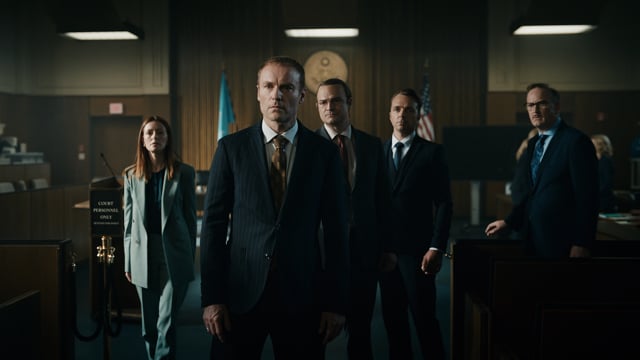
And their invention – Terravision, a virtual representation of Earth via “satellite images, aerial shots, architectural and altitude data” – sits at the intersection of art and technology. Their company, ART+COM, intends to collapse the world on a computer screen – a world without borders; a world that doesn’t discriminate, divide or intimidate.The Billion Dollar Code, which is showing on Netflix, is based on true events, it fictionalises scenes, including the names of two founders – Carsten Schlüter, a designer; Juri Müller, the main programmer – and their eventual nemesis, Brian Anderson, who steals their idea and sells it to Google.
A two-pronged narrative propels the four-part series: Carsten and Juri preparing for the trial with their lawyers, set in the early 2010s, is the first, while the other depicts their younger days, of them creating Terravision. It’s the second part that is far more compelling because it tells a version seldom captured in popular culture: the roadblocks for German tech entrepreneurs after the fall of the Berlin Wall. If the American West Coast was sprinting with ideas in the nascent Internet age, then Germany had still not woken up.
Here’s a contrast (not mentioned in the miniseries but critical to understand the chasm between the two worlds): In the early 90s, when ART+COM’s young inventors were struggling to find investors, the Apple engineers, backed by massive machinery, were working on a personal digital assistant, Newton, that would help create the iPhone a decade later.
The ART+COM team finds crucial support in the state-owned Deutsche Telekom, which takes a huge risk in backing the project, as the technology for Terravision doesn’t even exist. But the funding is substantial, and the deadline is nearing. the employees spend sleep
Suivez-moi sur les réseaux sociaux
Restez informé de mes dernières publications, projets et réflexions.